
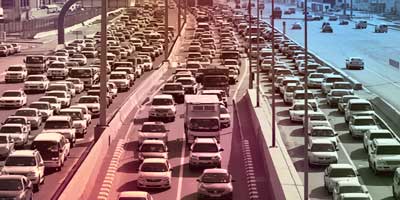
UAE's Road Transport Authority
Estimates 1.2 million Cars DRIVE
From Sharjah to Dubai
Every Working Day
Only Sand Tracks linked the Trucial States in 1965
British Government controlled Trucial States' development via their Trucial States Development Fund.
Road development was not on the Fund's list of priorities.
That changed when the newly formed Arab League, led by Gamal Abdul Nasser, made a direct proposal to the Trucial States to finance and construct a road linking Dubai, Sharjah and Ras Al Khaimah.
British Government saw that as a challenge its authority so set about countering that offer.
Neither Trucial States nor the Development Office was capable of financing this major road so they approached Saudi Arabia for funding.
King Faisal was willing to finance the project but not through the Trucial States Development Fund. He thought doing so would antagonise the Arab League.
King Faisal decided he would finance and build the Dubai/Sharjah/RAK Road.
British Government didn't have a problem with that but wanted the project to start promptly.
King Faisal was slow in starting the project.
By late 1965, King Faisal had still not started the project.
British Government became impatient and decided they would build the Dubai/Sharjah Road Section and leave the Sharjah/RAK Section for Saudi Arabia to build.
Choosing a Resident Engineer
Sir William Halcrow and Partners was appointed Consultants for the Dubai/Sharjah Road Project.
This project would be subject to political, financial and engineering pressures.
Halcrows needed a Resident Engineer who could manage these pressures and deliver a successful outcome.
Halcrows appointed:-
Vivian Hoad BSc FICE as Resident Engineer.
Michael Hamilton-Clark as RE's Assistant and Site Engineer.
Dubai/Sharjah Road Project.
Getting the Project Underway
Dubai/Sharjah Road starting construction spurred King Faisal to start building the Sharjah/RAK Road.
In May 1965, King Faisal awarded the Sharjah/RAK Road Contract to Bin Laden Construction Company, a Saudi Arabian owned company.
Vivian Hoad was born in Fareham, Hampshire, UK.
He later obtained his Civil Engineering Degree at Portsmouth University, Hampshire UK.
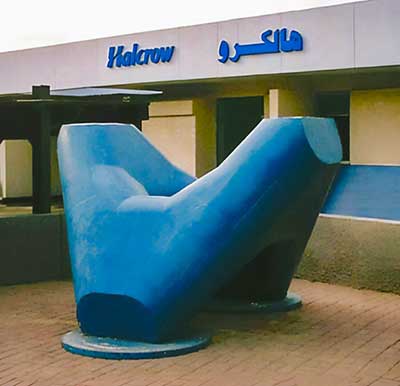
He first worked for his local Council then joined UK's RAF as a Flying Officer - Construction Division.
He was known to family, friends and colleagues as "Viv".
Viv subsequently joined Sir William Halcrows and Partners in their London Office where he served for several years before being assigned to Halcrow's Office in Benghazi, Libya.
There, Viv served under the Halcrows' Senior Engineer Roger Hayward. Roger later became the Resident Engineer for the Dubai Dry Docks Project.
Port of Benghazi was the first Port to use Stabits to protect its sea walls. Stabits were conceived and designed by Harry Ridehalgh, a senior partner of Sir William Halcrow & Partners. Viv became responsible for the production of these unique Stabits.
Stabits later protected the sea walls of Port Rashid and Jebel Ali Port in Dubai.
In Libya, Viv gained a reputation for his diplomacy, his understanding of local culture and his engineering competence.
Vivian Hoad moved to Dubai as Resident Engineer for the Dubai/Sharjah Road Project. His wife, young son and daughter accompanied him.
Hoad family moved into a newly built Villa off Jumeirah Beach Road, adjacent to Jumeirah Beach.
They soon adjusted to life in Dubai!
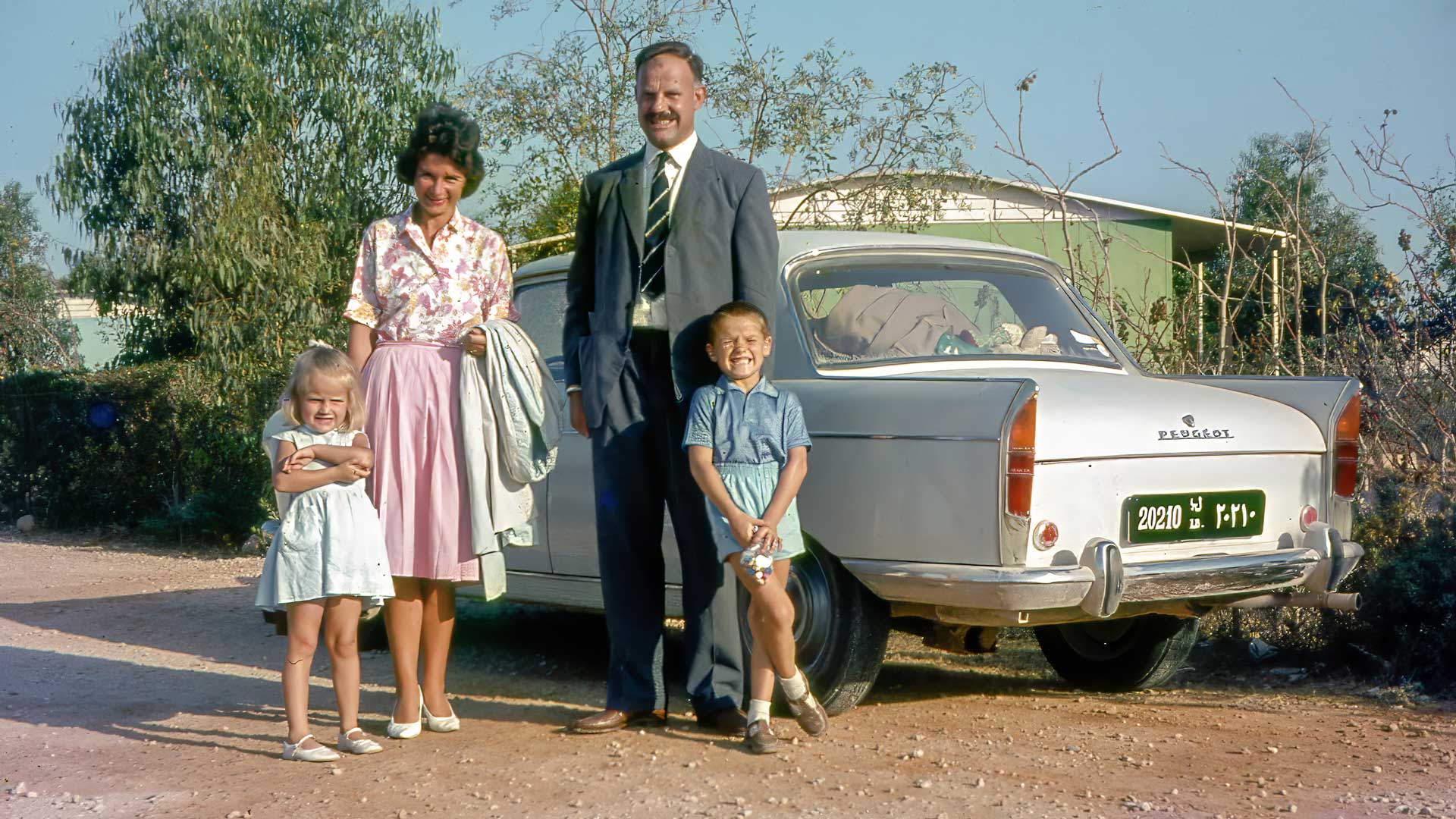
Hoad family outside their home in Benghazi, Libya
Hold Cursor over Image to halt Slideshow
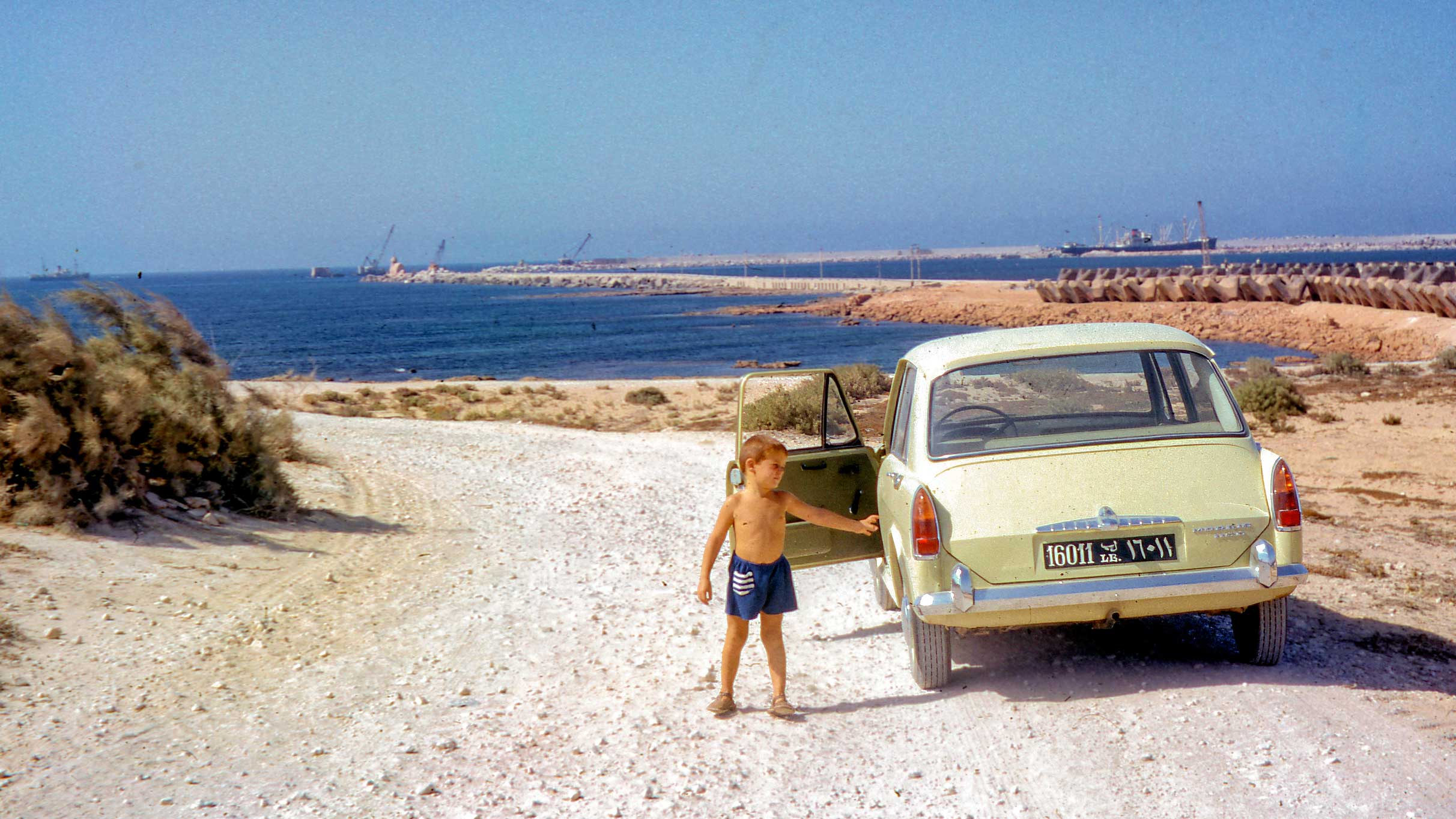
Looking towards Port of Benghazi
See Stabit on sea wall prior to installation
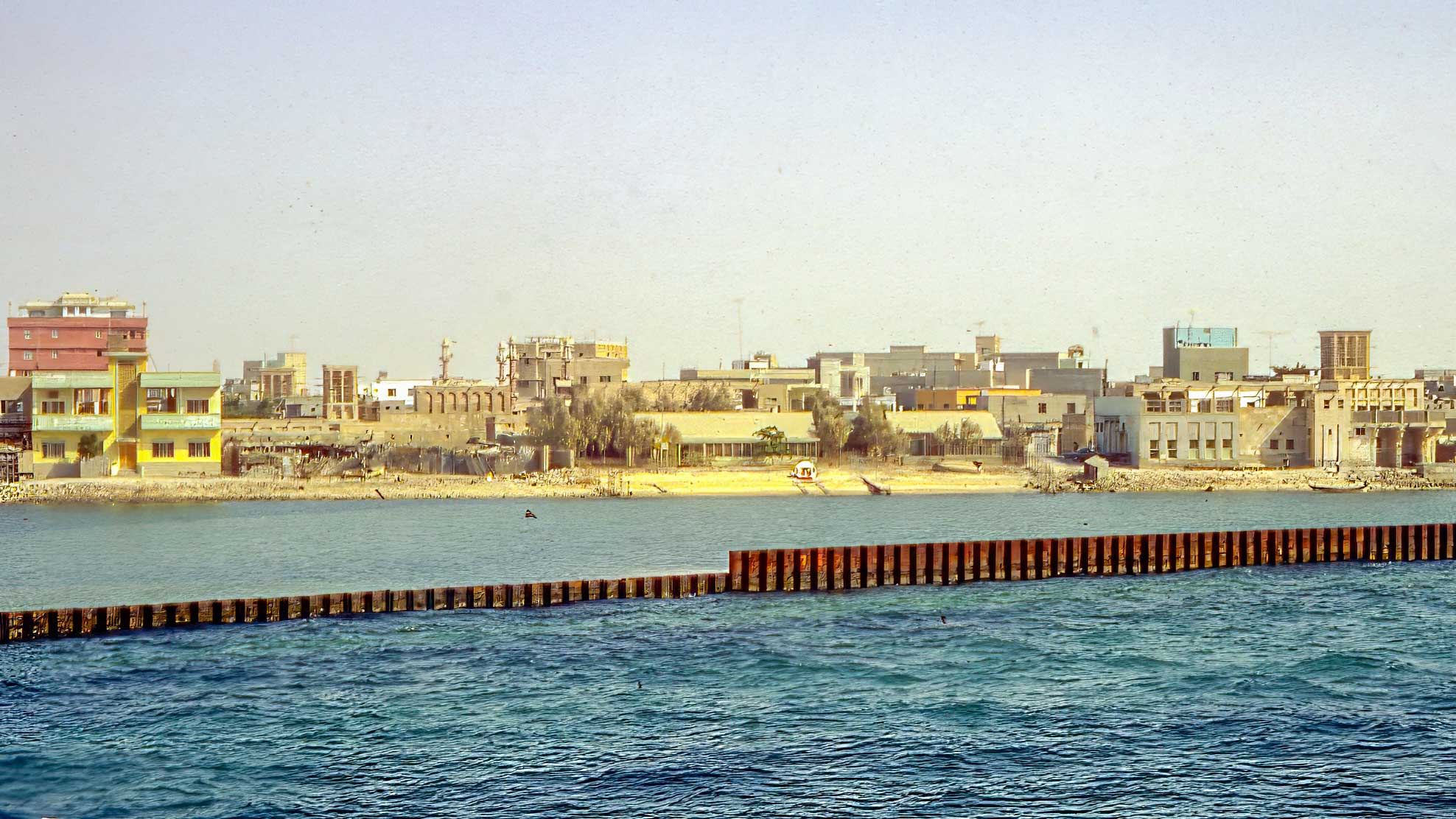
Looking across Dubai Creek
View of Deira from Dubaiside
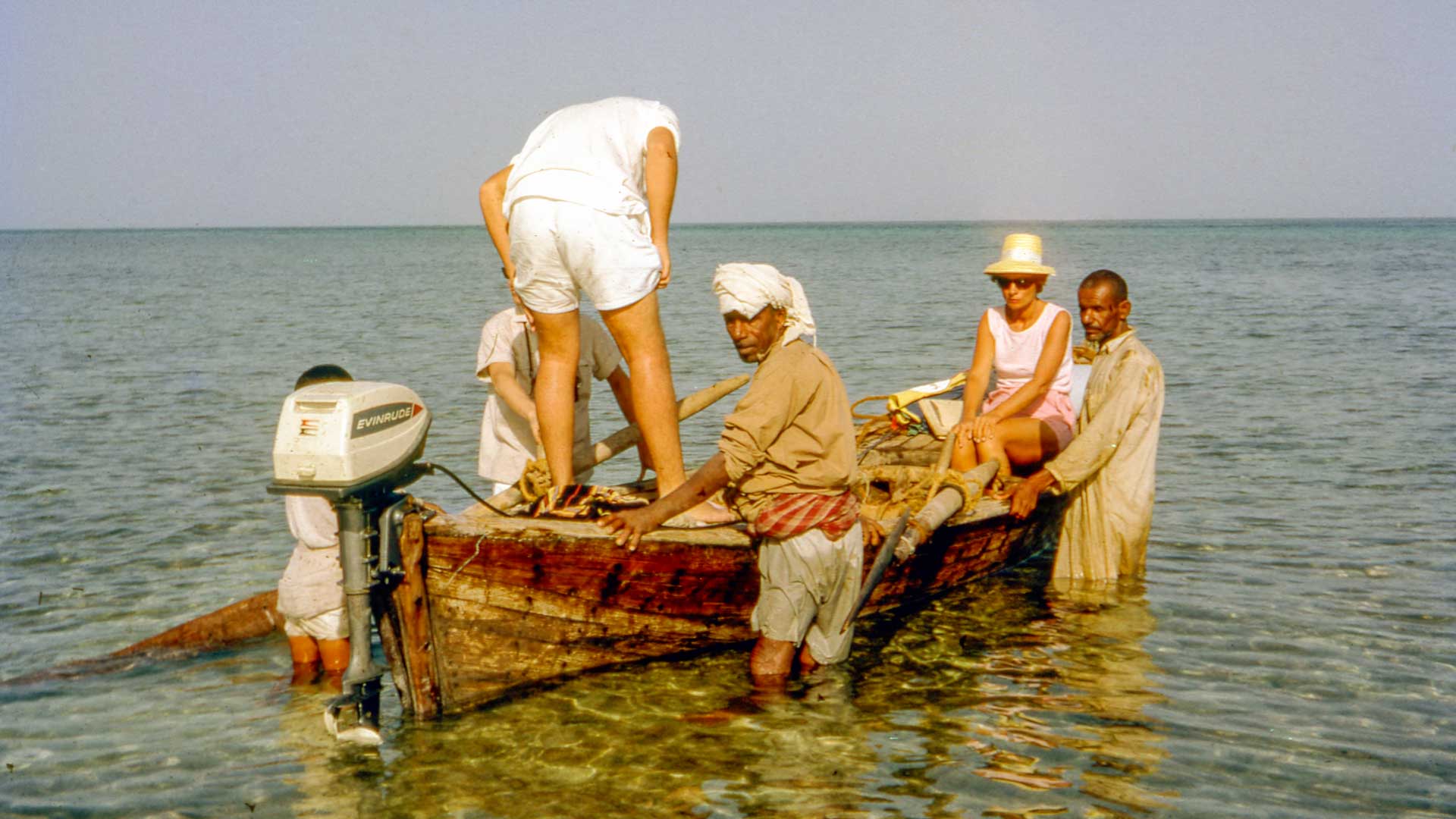
Going Fishing - Dubai Style
Hold Cursor over Image to halt Slideshow
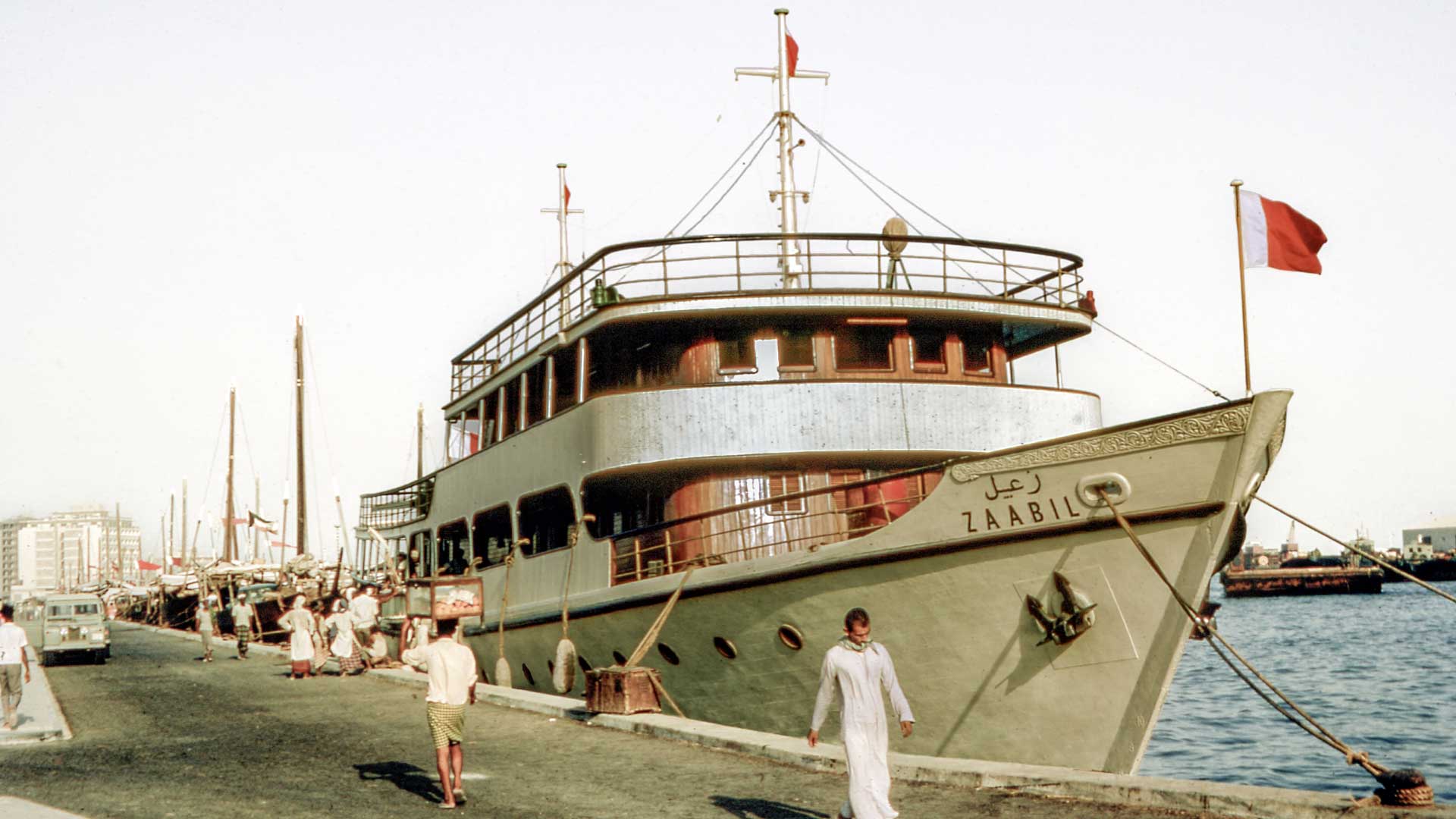
Sheikh Rashid's Yacht Zaabil
Berthed at Customs Wharf, Dubai Creek.
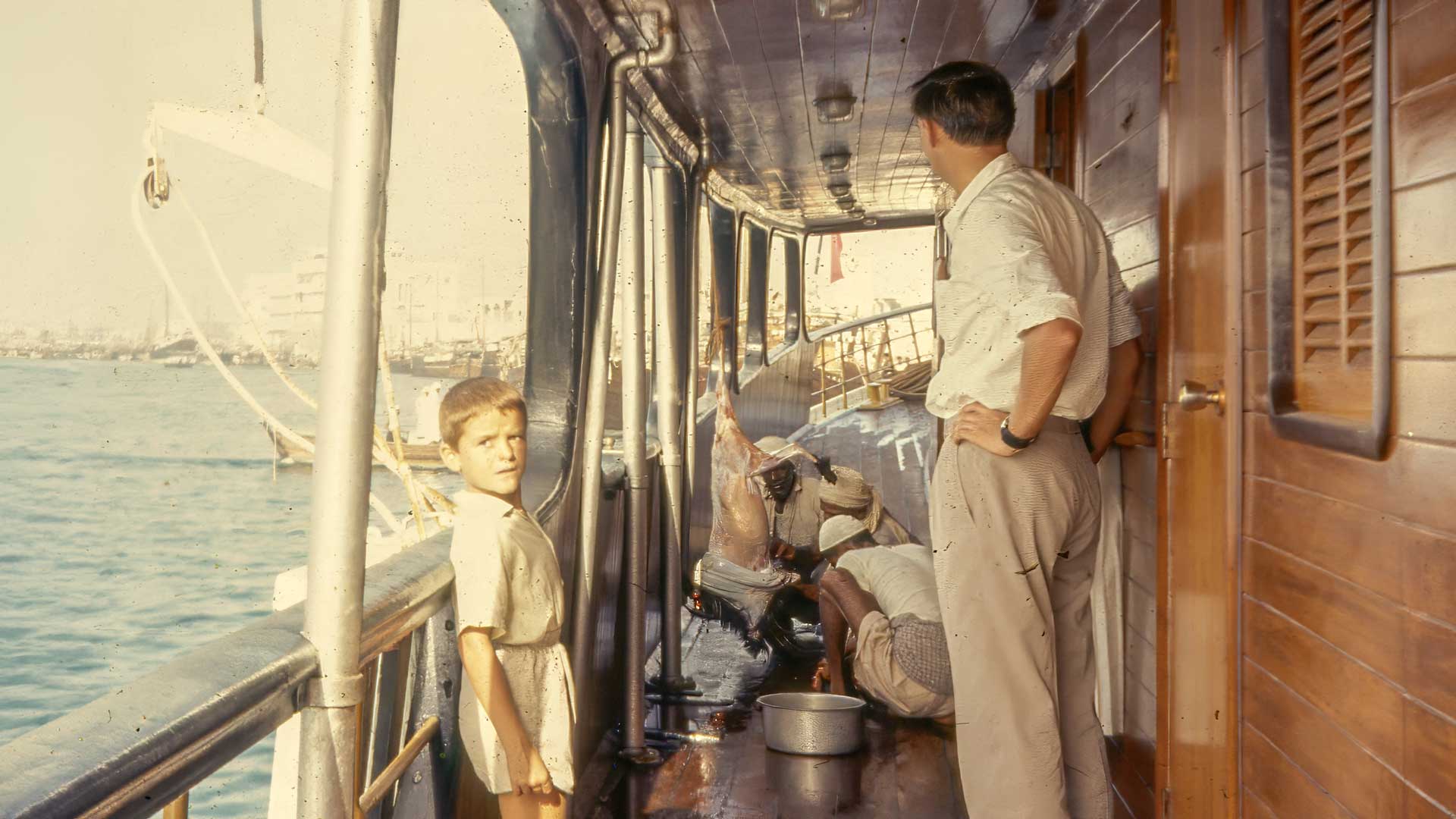
Onboard the Yacht Zaabil
Berthed at Customs Wharf, Dubai Creek.
Dubai/Sharjah Road Project was underway by beginning of 1966.
Mothercat, a Sharjah based construction company, had been appointed as the project's Contractor.
During the project, Vivian Hoad worked with the Sheikh Rashid's Office, Sharjah Ruler's Office and Representatives of the Trucial States Development Fund.
He was responsible for releasing monies to the Contractor based on works completed and having been signed off.
9 miles of the Dubai/Sharjah Road, surfaced with asphaltic concrete, were completed in November 1966.
Sharjah/Ras Al Khaimah Road Project commenced in 1967 and completed some time in 1969.
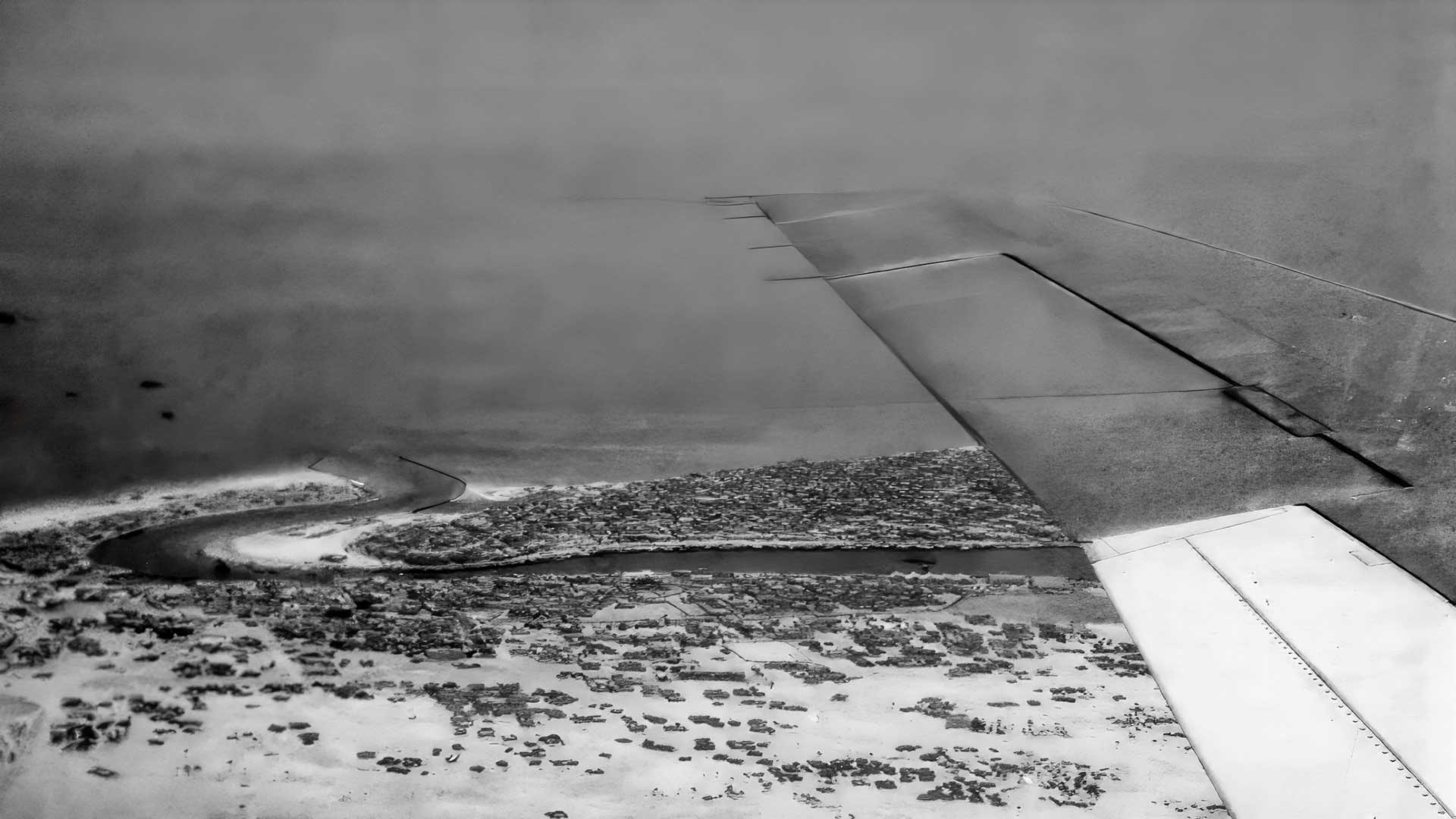
Flying over Dubai - 1965
Credit M.Hamilton-Clark
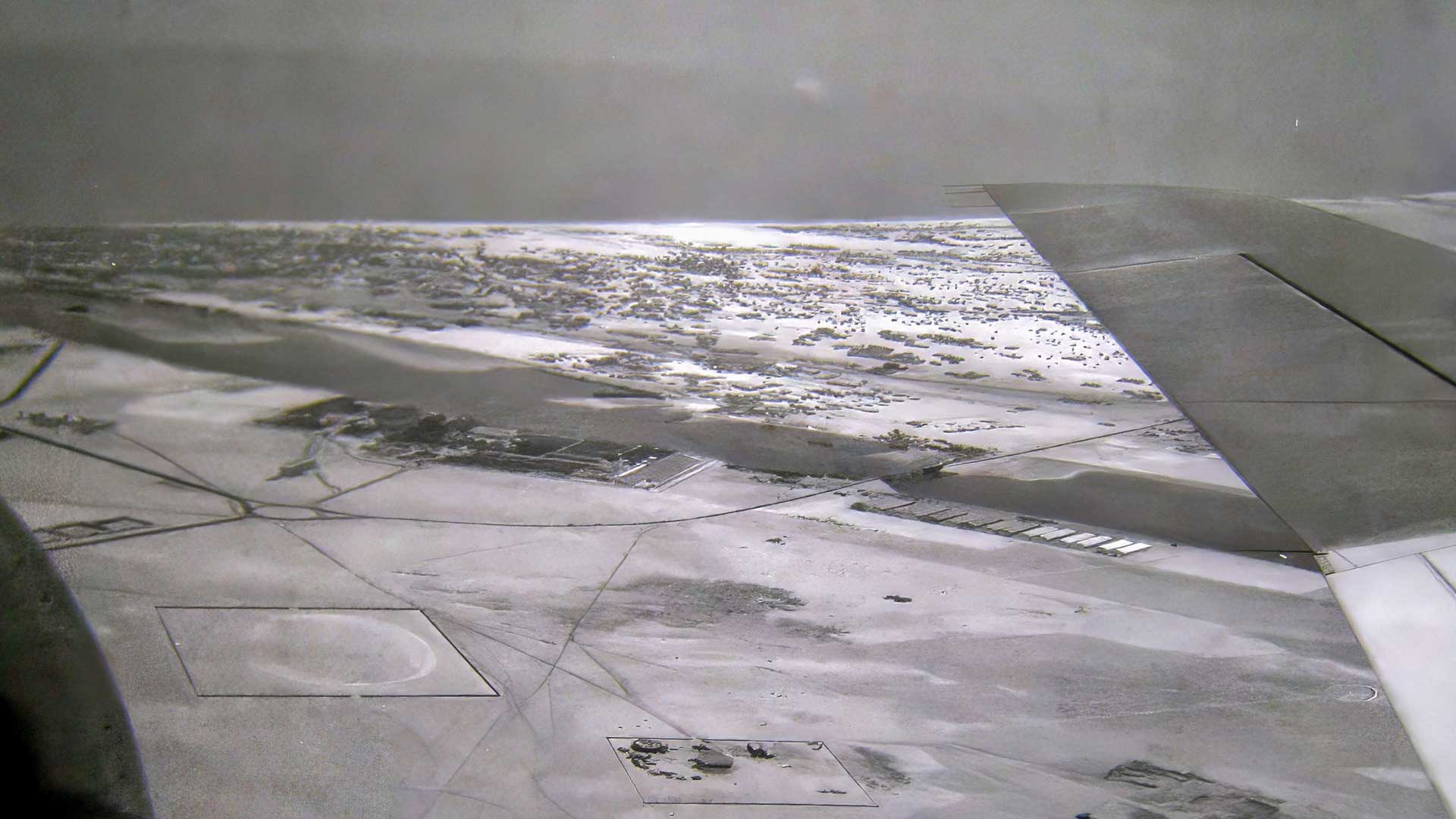
Flying towards Dubai Airport
Credit M.Hamilton-Clark
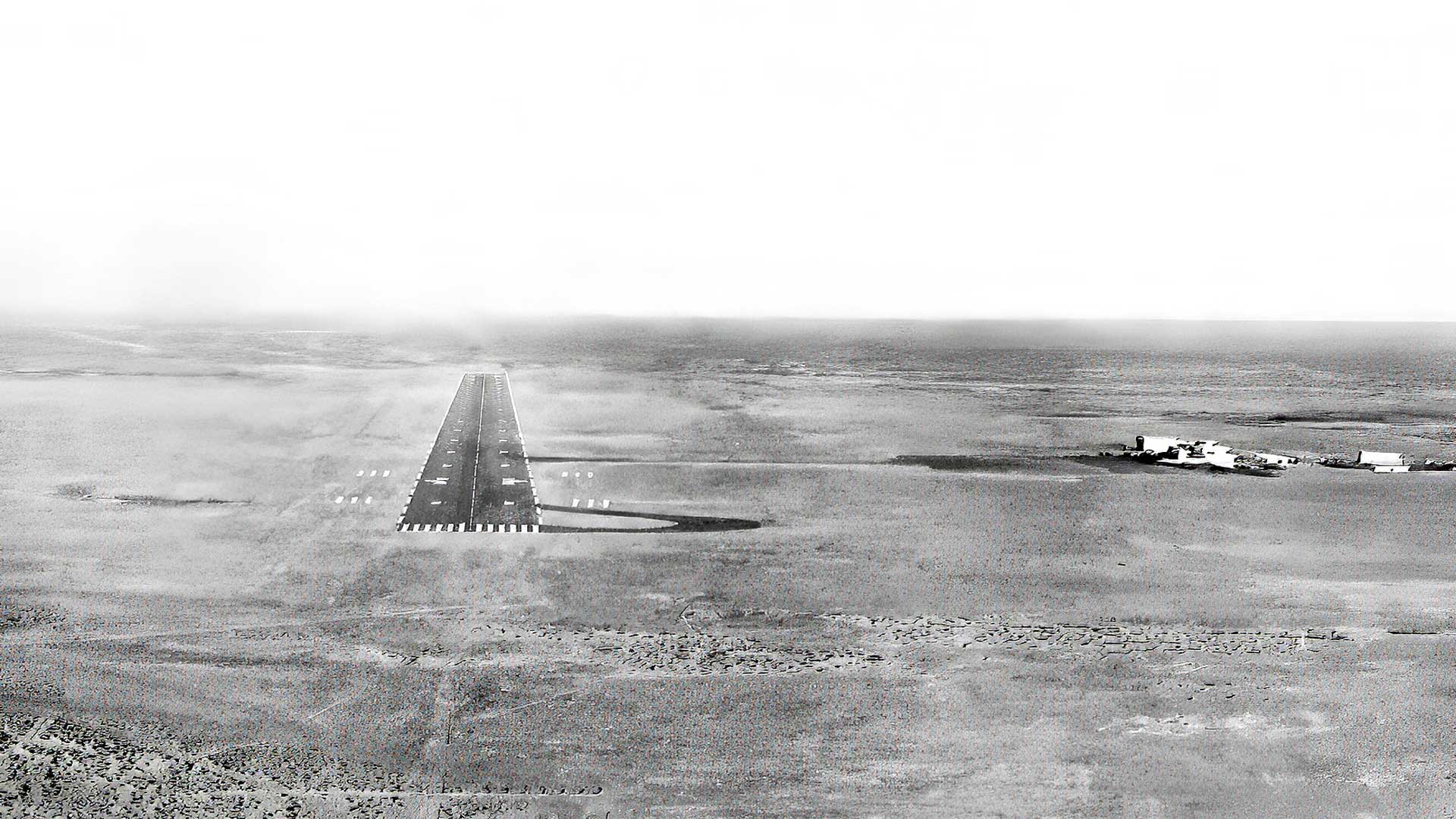
Dubai Airport's Single Runway - 1965
Credit M.Hamilton-Clark
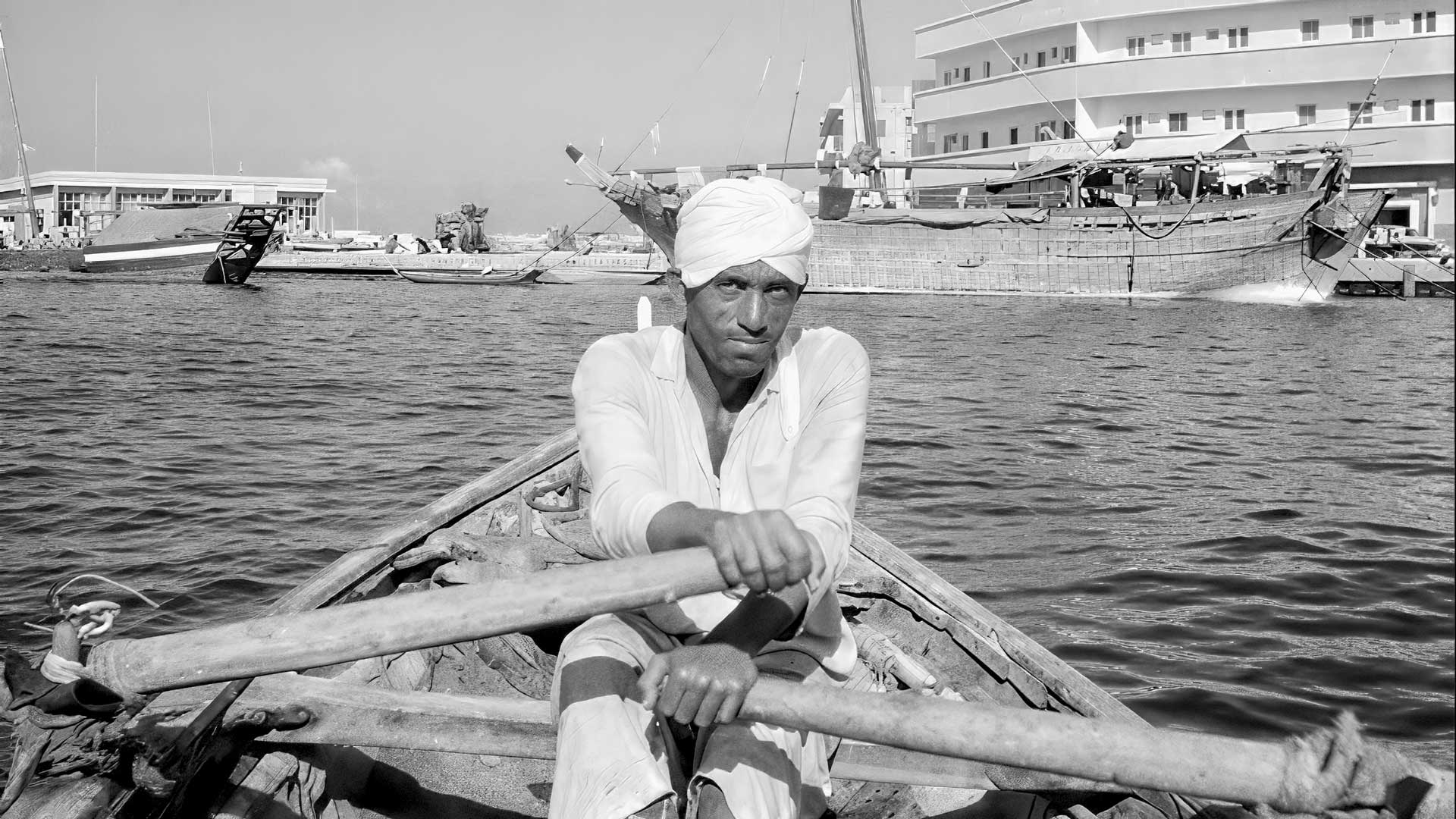
Traditional Abra Rower on Dubai Creek!
Credit M.Hamilton-Clark
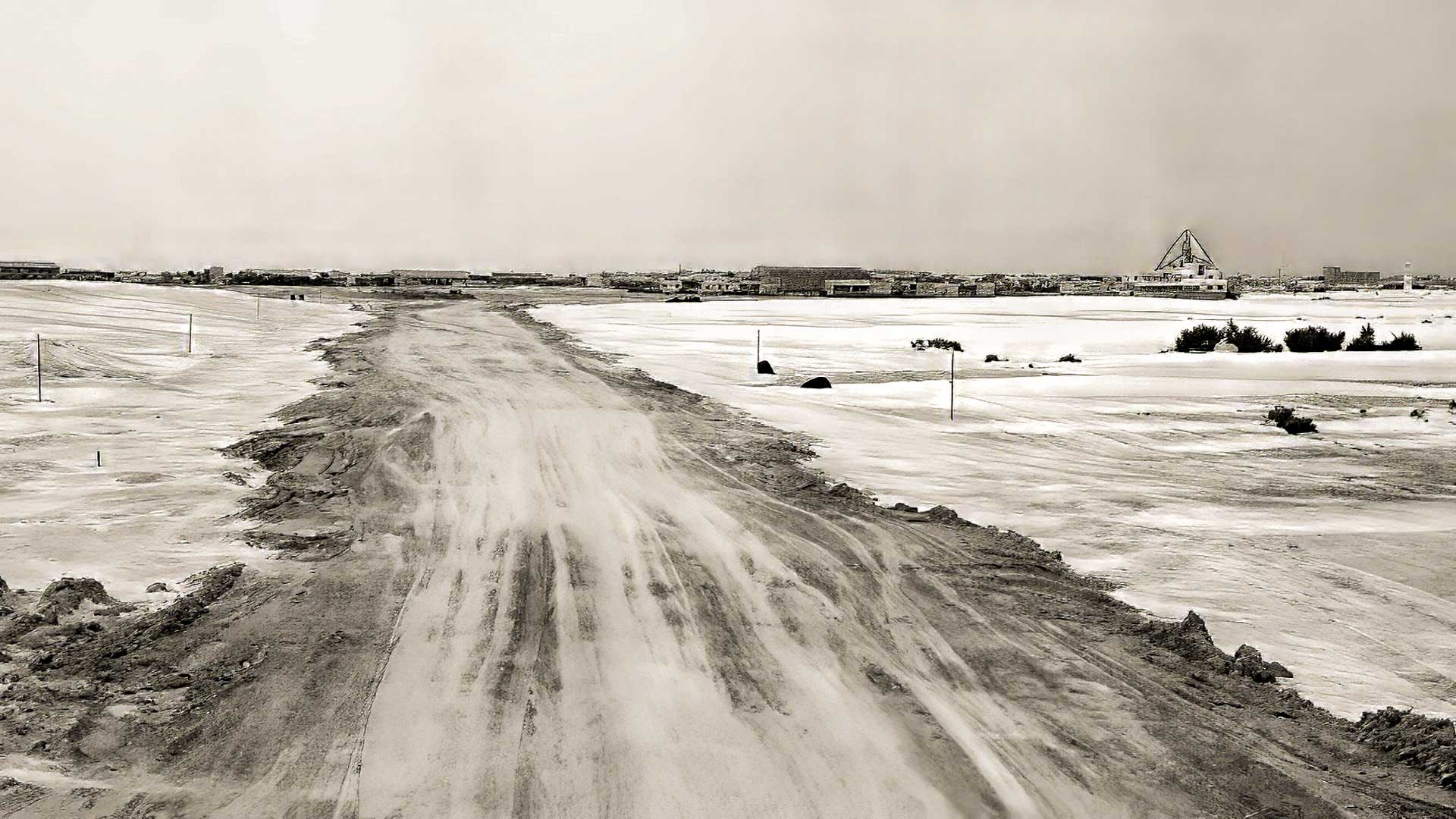
Dubai Sharjah Road Underway - Clock Tower in the Background
Credit M.Hamilton-Clark
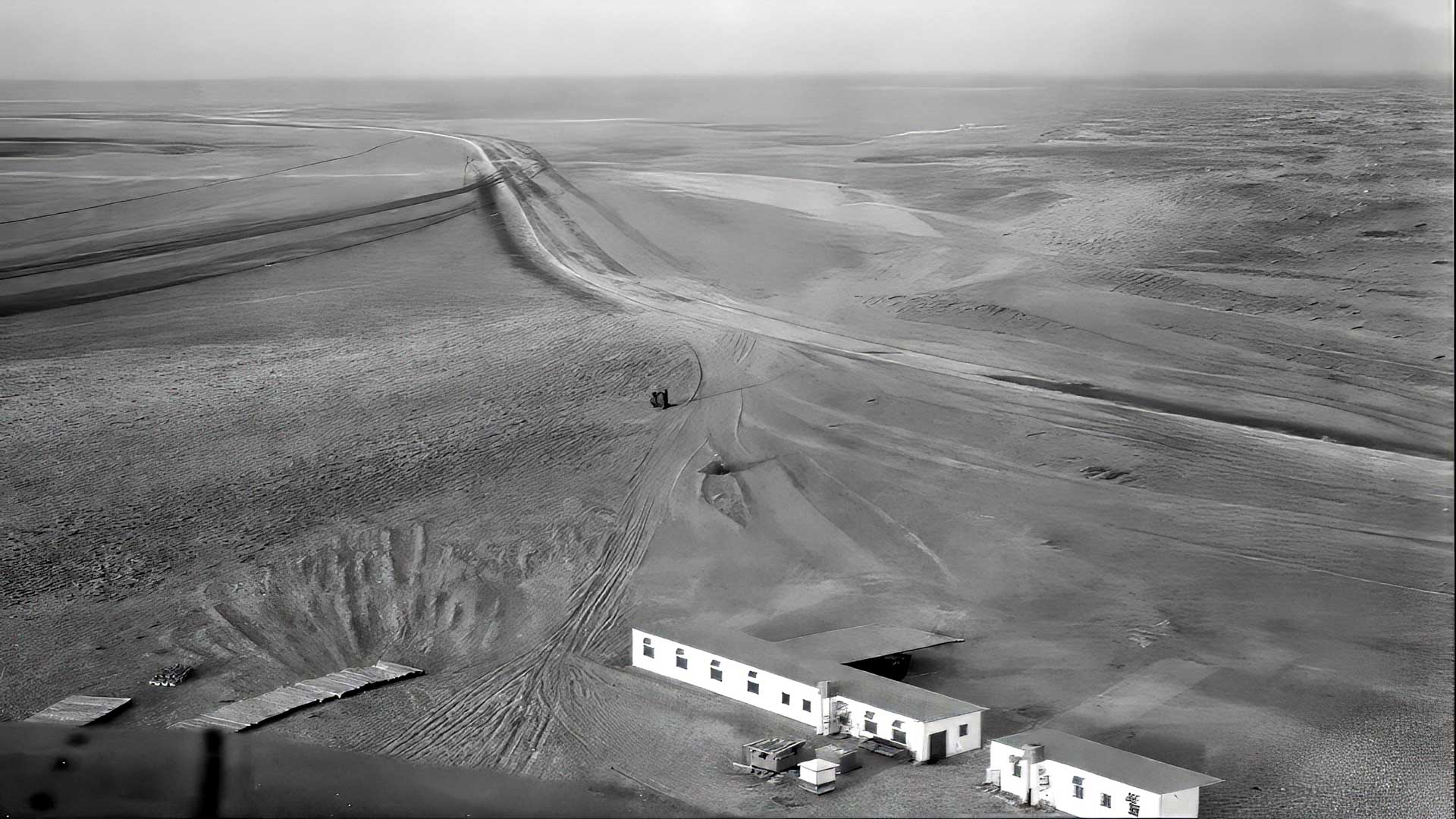
Aerial View of the Dubai Sharjah Road.
Credit M.Hamilton-Clark
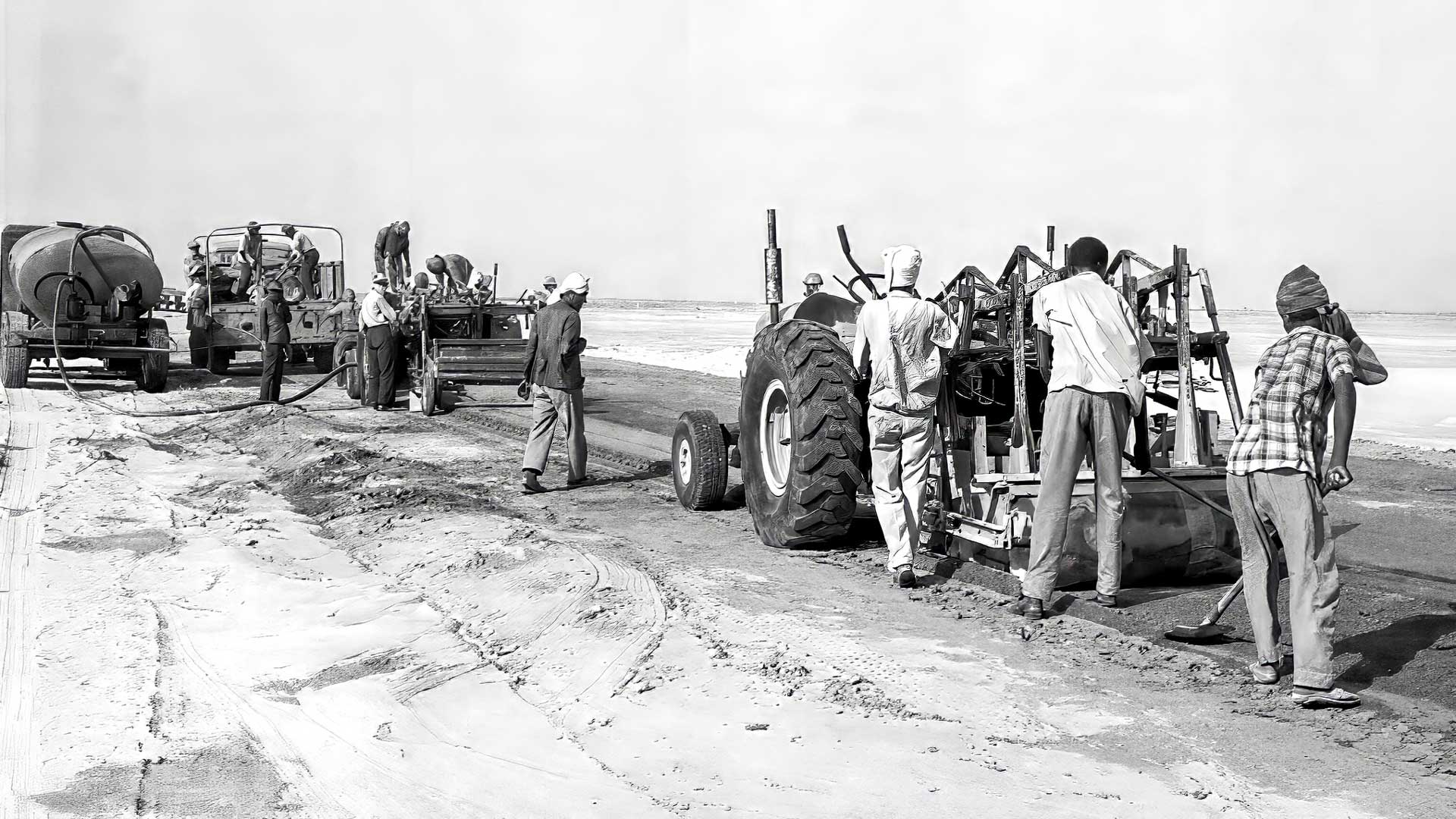
Laying the Dubai Sharjah Road Surface Material
Credit M.Hamilton-Clark
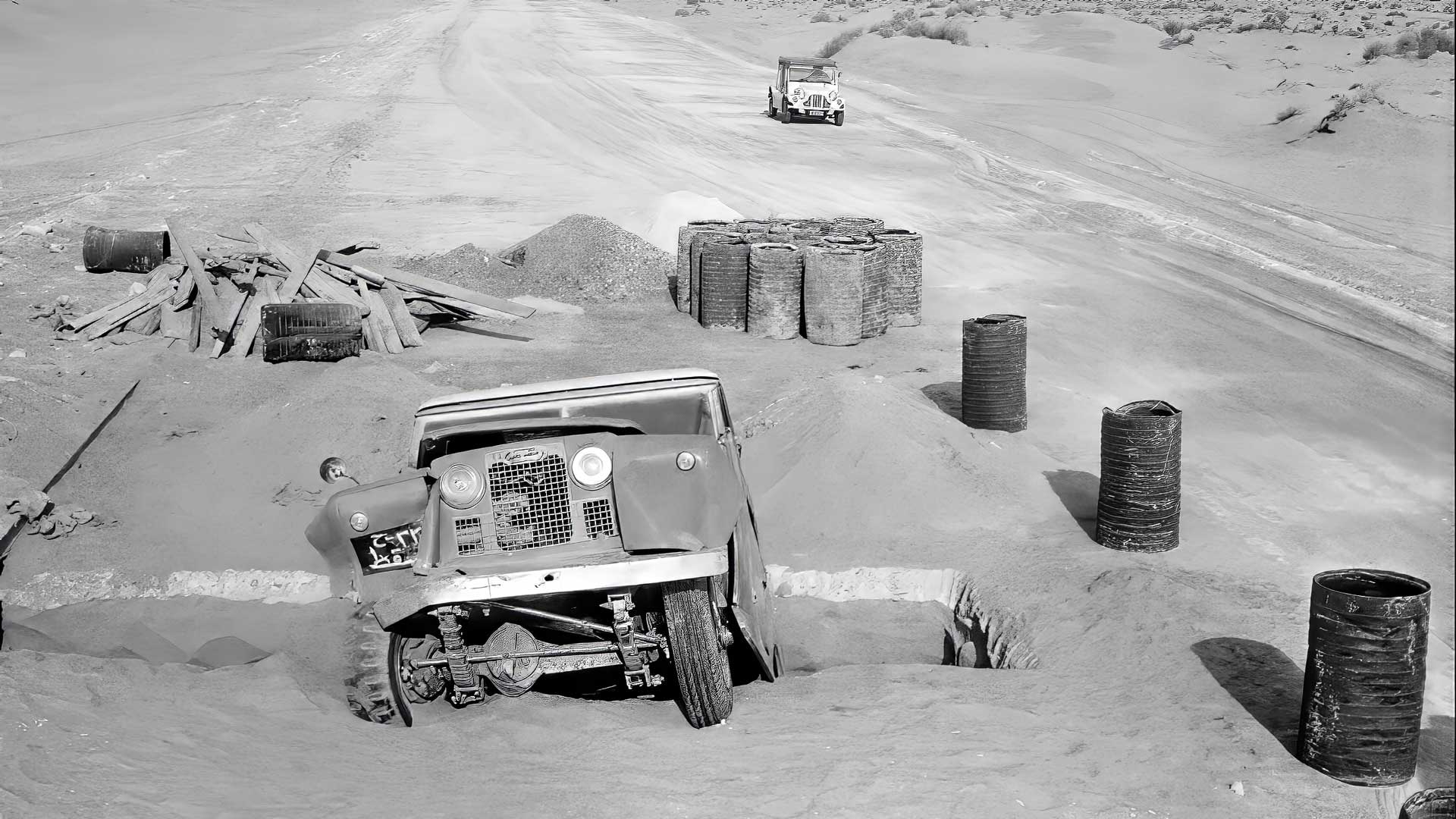
OOPS! A common sight! Barriers and warning signs were often ignored.
Credit M.Hamilton-Clark
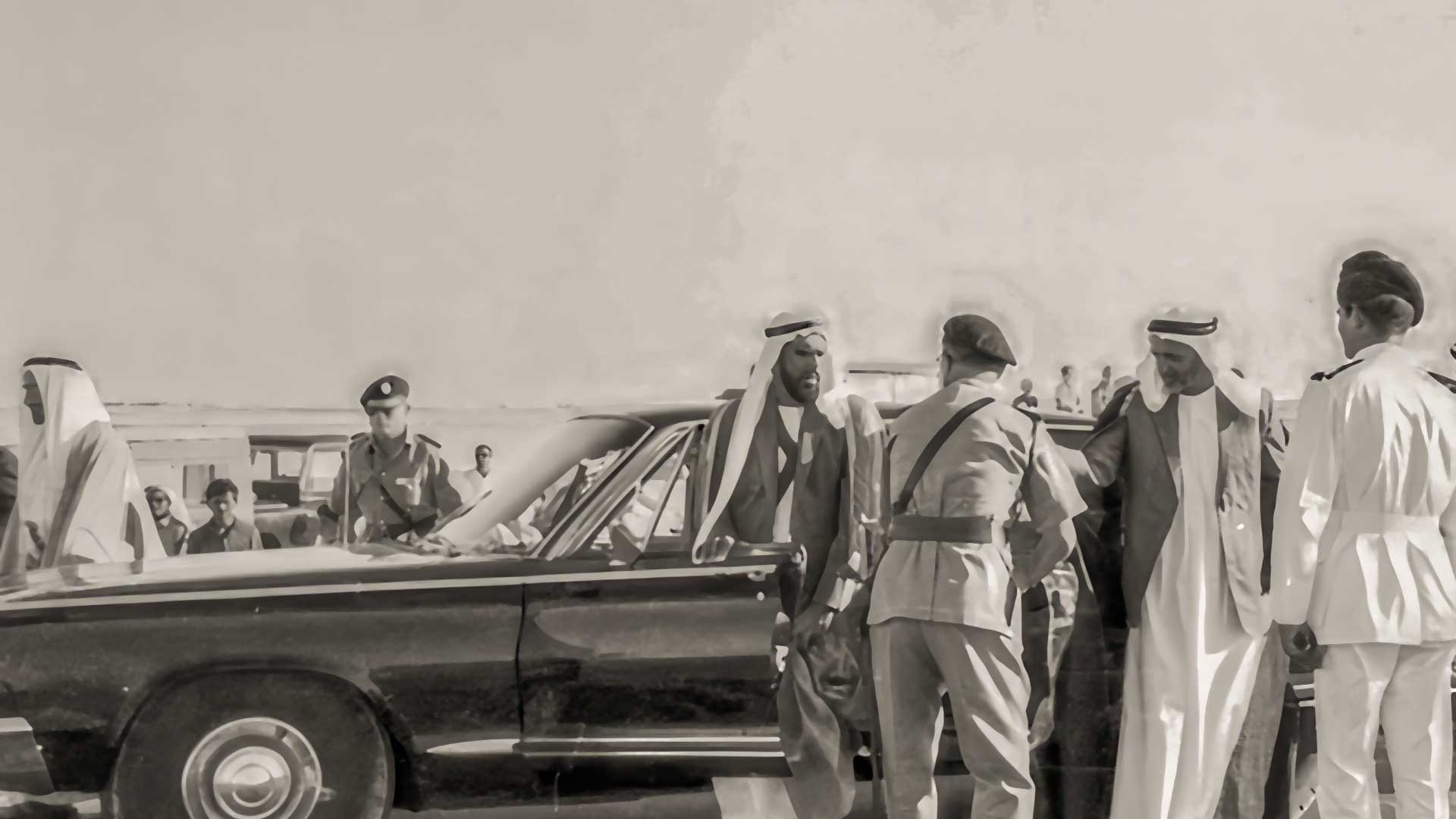
Sheikh Rashid arrives for the Dubai Sharjah Road opening
Credit M.Hamilton-Clark
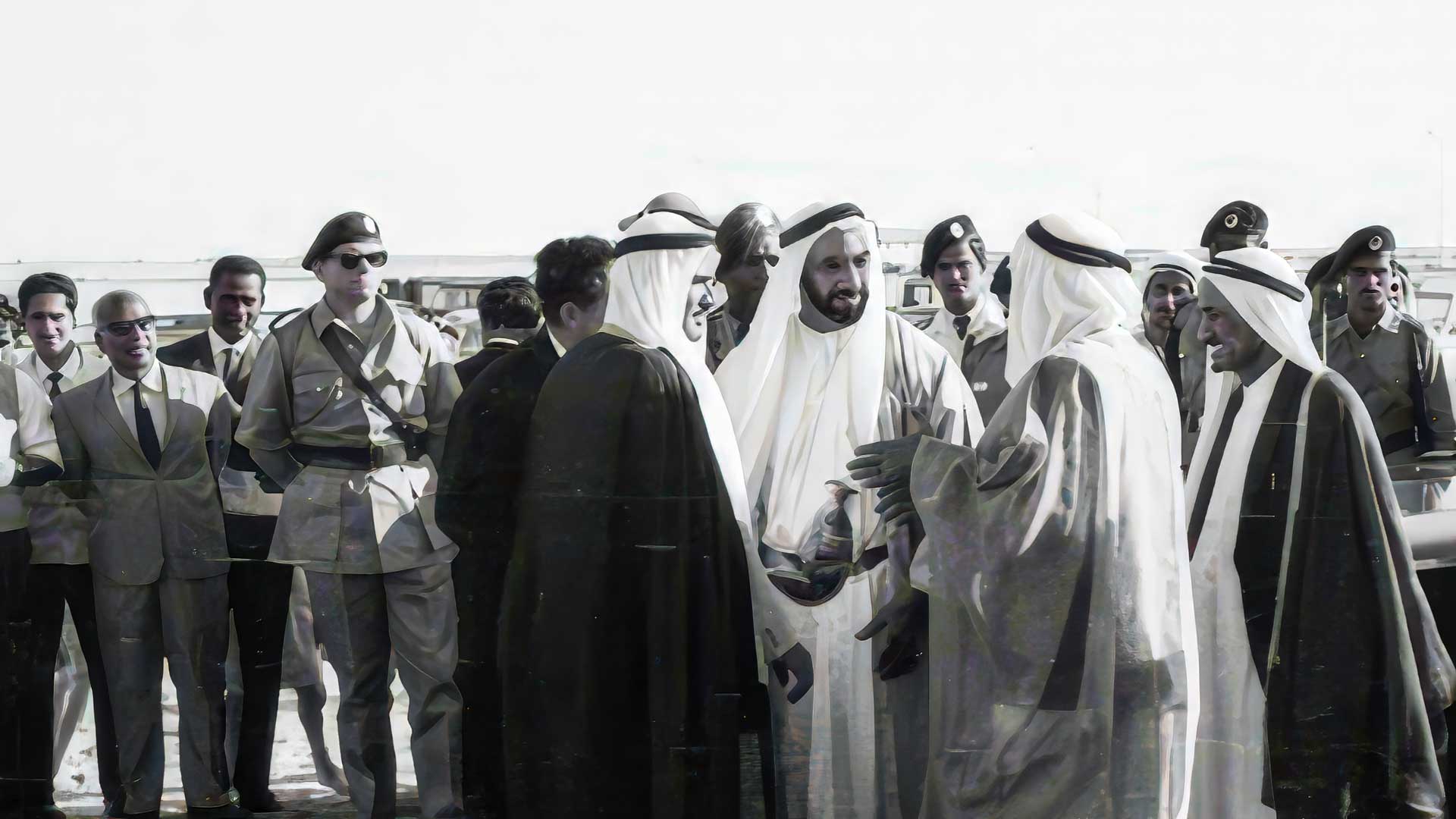
The Sheikhs confer
Credit M.Hamilton-Clark
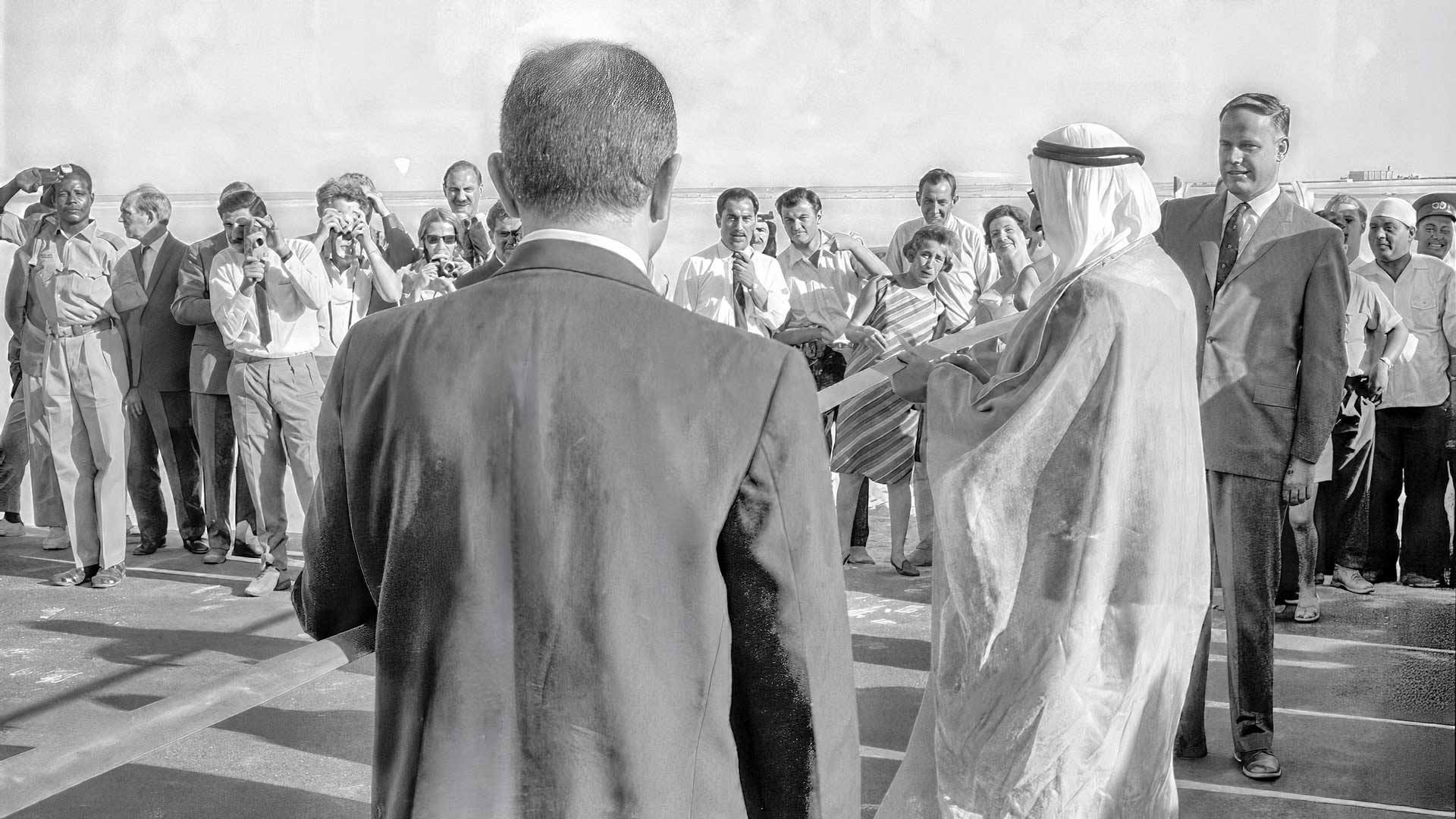
Official Opening of the Dubai Sharjah Road with Vivian Hoad RE looking on.
Credit M.Hamilton-Clark
HOVER over Slideshow to STOP. MOVE Cursor OFF Slideshow to CONTINUE
Viv impressed Halcrows in the way he managed relationships with the Ruler's Office and the Trucial States Development Fund personnel.
Halcrows saw an opportunity for Viv to take on a new role where he would work with the Ruler's Office.
In effect this meant replacing Nevil Allen with Vivian Hoad.
Nevil, although a long term Halcrow employee, had grown close to Sheikh Rashid and protected Sheikh Rashid's interests.
Halcrow's proposal didn't get off the ground!
CONFIDENTIAL
Development Office, and Ridehalgh indicated that he had had this in mind. He had contemplated transferring this aspect of Halcrows' work to the engineer (I think his name was Hoad) whom Halcrows had sent out to take charge of the Dubai/Sharjah road project, and who apparently had got on rather better with Rae (although he too had had his troubles with him).
However when he had mentioned to (Sheikh) Rashid that it was perhaps time for Allen to be moved from Dubai, Rashid had put his foot down and said that he would not entertain the idea; he had further asked Ridehalgh to let him know if there was any question of Allen resigning of his own accord.
Hoad had therefore had to come away from Dubai at the end of the road contract and had now been assigned elsewhere. It seems that Halcrows regard themselves as completely stymied by Rashid's attitude and bound to keep Allen in Dubai
Viv spent 1967 working on road pavement design for roads for the Trucial States and Pakistan.
He was also appointed Chief Assistant Engineer on Nyumba Ya Mungu Hydro Electric Power Station in Tanzania for six months.
1968 saw Viv move back to Libya as Chief Engineer and Executive Director to the Beida Development Organisation
Viv's family lived in Benghazi while he made the daily commute to Beida along the coast road via Tocra Pass.
He did so without any problem until the morning of 1st September 1969
'One morning - 1 September 1969 - I set out from the villa in Benghazi to get to the office for 8 a.m
I left at 5.30-6.00. I got to Beida to be met by barricades across the road. I was told there'd been a coup, and I couldn't go to my office - the army had taken over.
I set off back in my government car to my family.
Just before Benghazi I was stopped by revolutionaries coming out in their armoured cars who asked me what I was doing. By then there was a curfew in force. Eventually I persuaded them to allow me to continue....
At the end of the highway I was stopped by a young soldier. He said: 'No, you can't go on.' He jumped in the car and I had to drive him round various parts of Benghazi for half an hour, commandeered!
Eventually I persuaded him to let me leave the car at a petrol station and walk. There were various water trenches open and I cowered in these when I heard any shots
A man called Widgery, the director of electricity for the whole country, lived on the ring road, next door to Halcrow's Chief Resident Engineer who was away during the coup. I reached Widgery's house and found several other expats there, and my son. I spent the night there.
Next morning the curfew was lifted. My villa was half-a-mile away. Somebody gave me a lift. To my relief, my wife and daughter appeared while I was there.'
Port Qaboos was designed as a traditional cargo port.
Port was to replace historic operations whereby cargoes were discharged from ships anchored offshore into barges that were towed to a beach for discharge ashore.
Port Qaboos enabled ships to berth at any of the Port's nine berths to discharge their cargoes directly onshore.
Building Port Qaboos was a challenge involving extensive rock blasting and dredgeing.
Viv departed Libya because of a Coup and arrived in Oman in 1970 where, later that year, Young Sultan Qaboos overthrew his father to rule Oman.
Halcrow's London Head Office began refering to Viv as “Coup Hoad”!
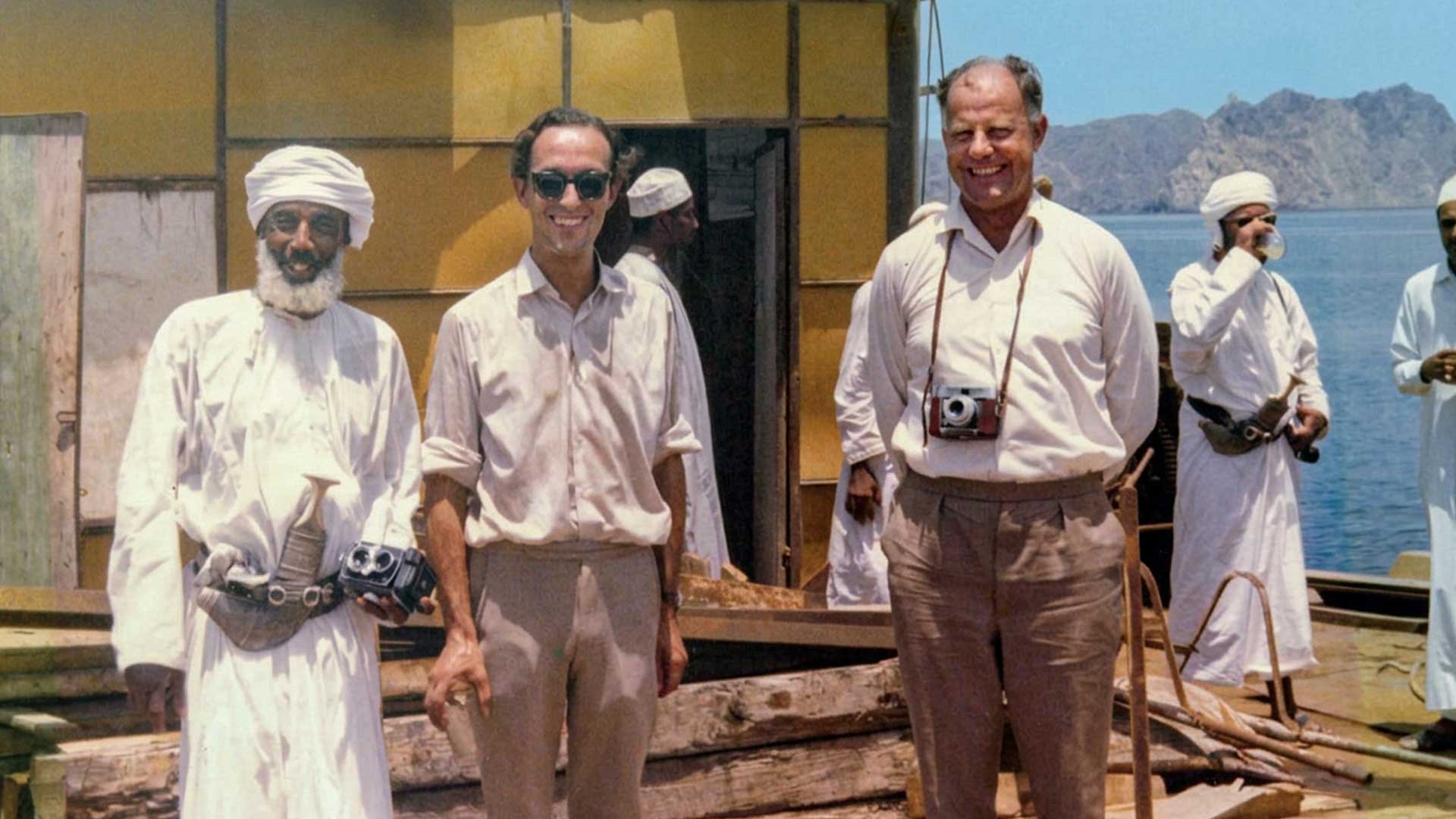
Viv with HH Sayyid Abbas bin Faisal bin Turki Al Busaidi and Bill Heber-Percy.
HH Sayyid was HH Sultan Qaboos's Uncle.
On a dredging barge in Port Qaboos
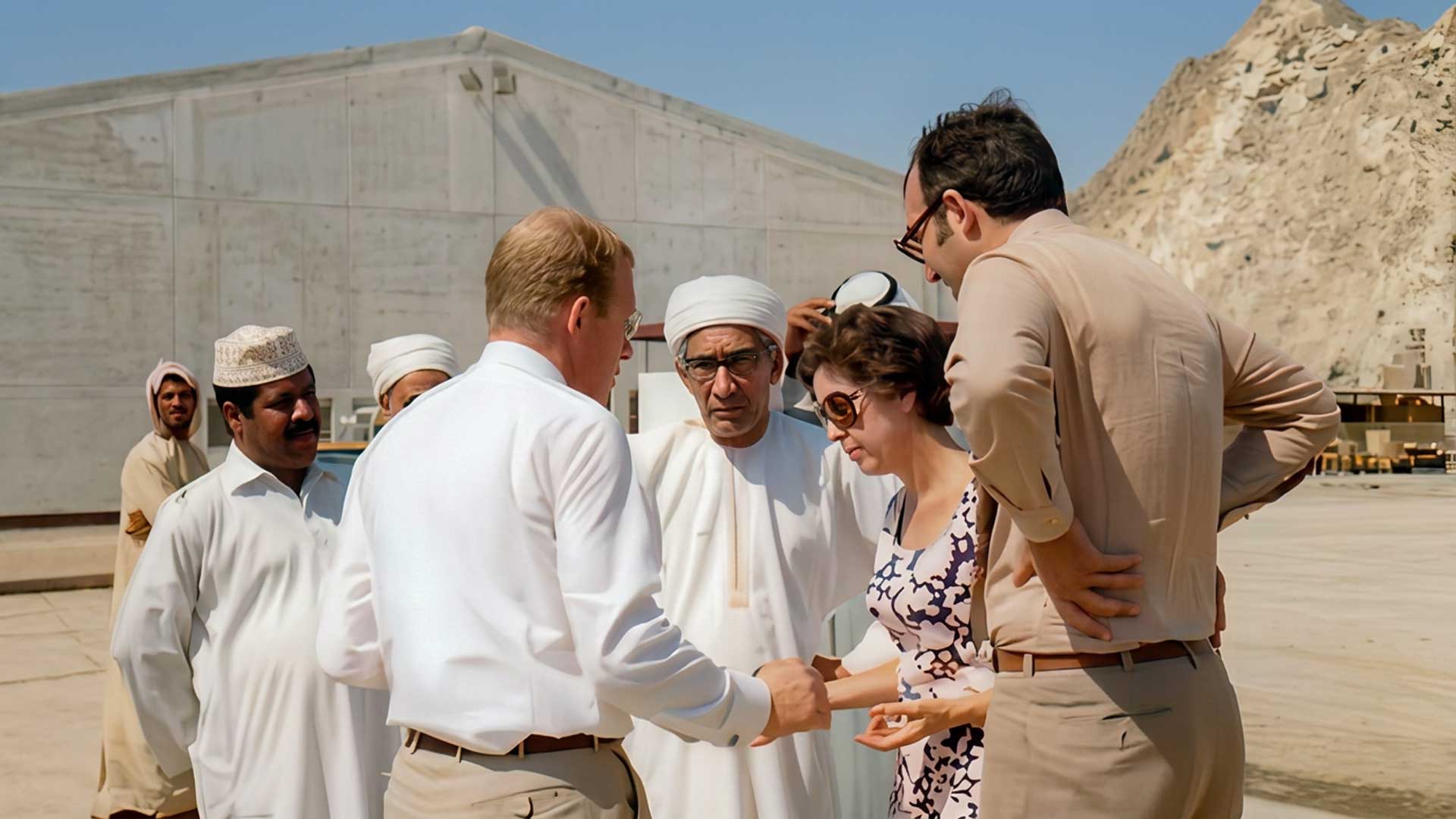
Onsite at Port Qaboos
Cargo Shed and Rocks in Background
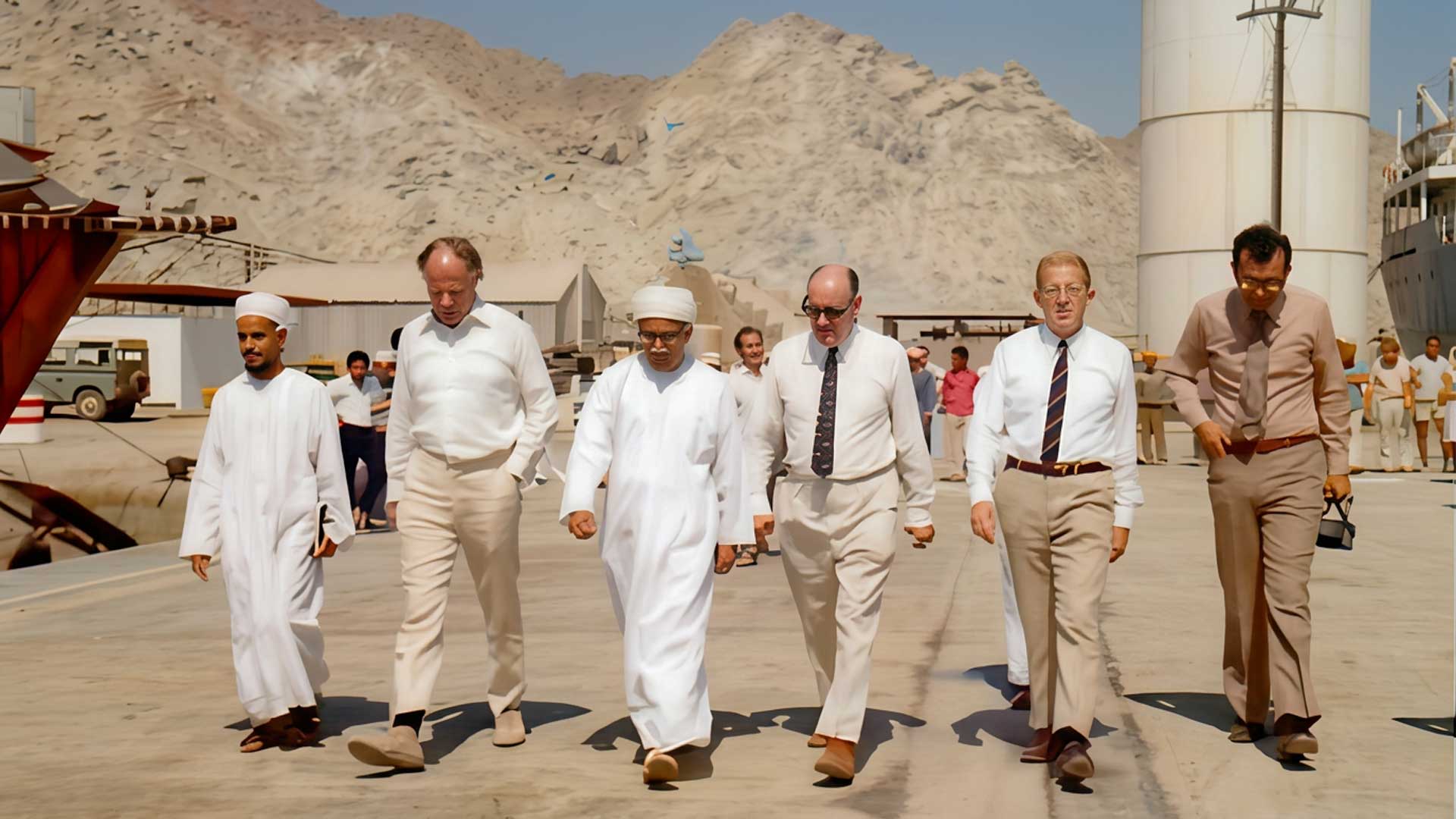
Herman Strunk (Hochtief) and Ghassan Ejjeh (Six Construct) - Port Qaboos Joint Venture Contractors.
Viv is second from left.
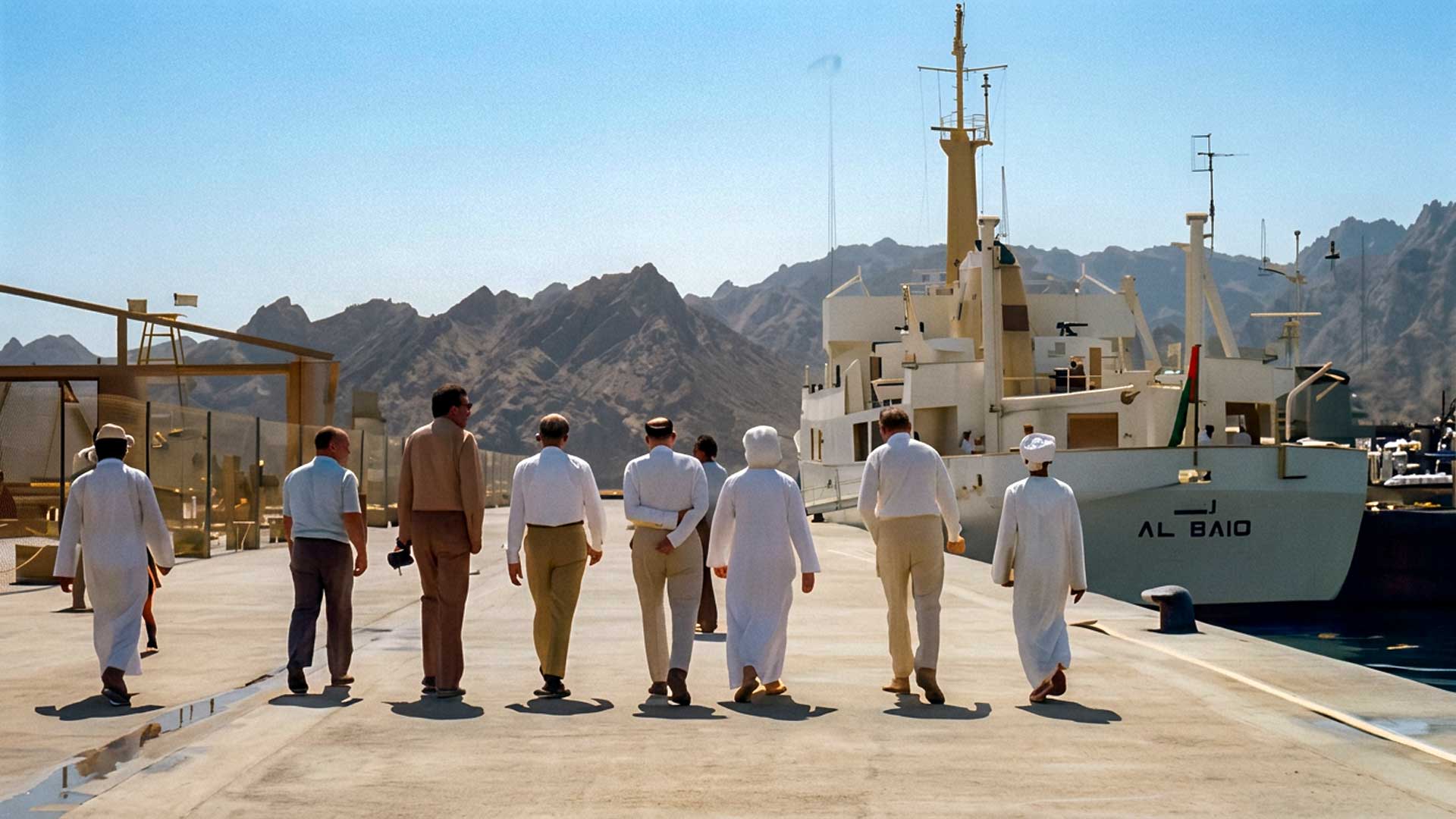
Walking on the newly constructed Quay
Sultan Qaboos's Yacht Al Said in the background.
HOVER over Slideshow to STOP. MOVE Cursor OFF Slideshow to CONTINUE
Viv was also responsible for a range of engineering projects including roads, military camps, airfield studies and more. He was also Halcrow's Respresentative for the Oman, responsible for establishing staffing for the Dhofar Development Programme
Please refer to Vivian Hoad's CV for more detail.
Halcrows appointed Viv as an Associate and Chief Resident Engineer for the Port Of Jubail.
Jubail Port was destined to become the largest industrial Port in the World.
Viv was later appointed as Principal Associate and Partner in the Halcrow International Partnership
He also had responsibility for a wide range of dredging contracts and minor Ports development in Saudi Arabia.
Viv was also consulted on design and planning works for the Port of Jeddah.
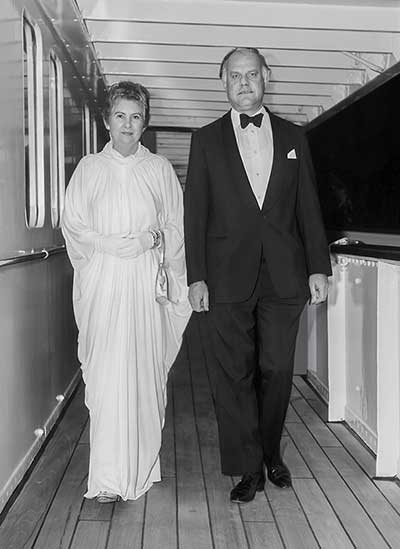
Queen Elizabeth 2 and the Duke of Edinburgh were hosted by King Khalid on their State Visit to Saudi Arabia on this day 1979, the first ever by a female Head of State.
Events included an Official Welcome, a Picnic in the Desert, Camel Racing and a State Dinner hosted by King Faisal in honour of the Queen and Duke at the Maathar Palace in Riyadh.
Queen Elizabeth (wearing the Vladimir Tiara) and Duke of Edinburgh hosted a Return Dinner in honour of the Saudi Royals on the Royal Yacht Britannia.
Viv and his wife were invited to this dinner on board the Royal Yacht Britannia.
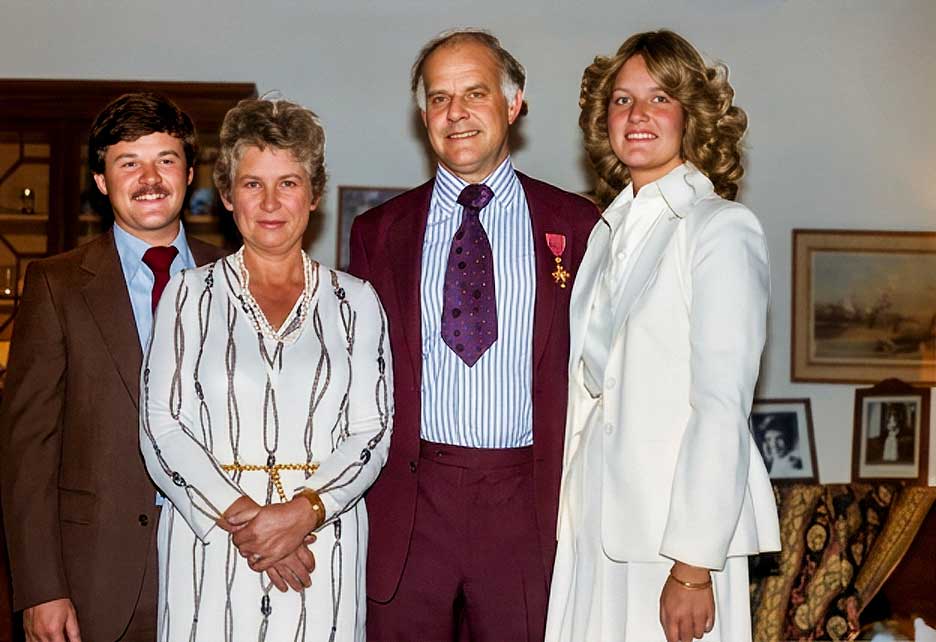
Appointed Officer of the Order of the British Empire (OBE) Vivian John William Hoad.
For services to British engineering interests in Saudi Arabia.
Vivian was called to Jeddah where the British Ambassador to Saudi Arabia presented Vivian with his Order of the British Empire (OBE).
Viv's wife, son and daughter were present for the Award Ceremony.
They later enjoyed a celebratory dinner with Ambassador Sir John Wilton in his Jeddah home.
Viv rejoined Halcrows' London Office as a Partner and Member of Halcrows' Main Board of Directors.
Halcrows were subsequently selected to lead a British Metro Consultants Group in Baghdad, Iraq, overseeing the development of a Metro Rail System.
Life in London Office did not suit Viv. He was more at home working in the Arab World and in a smaller team environment.
In 1982, Viv was appointed Executive Director of the British Metro Consultants Group and relocated to Baghdad, Iraq.
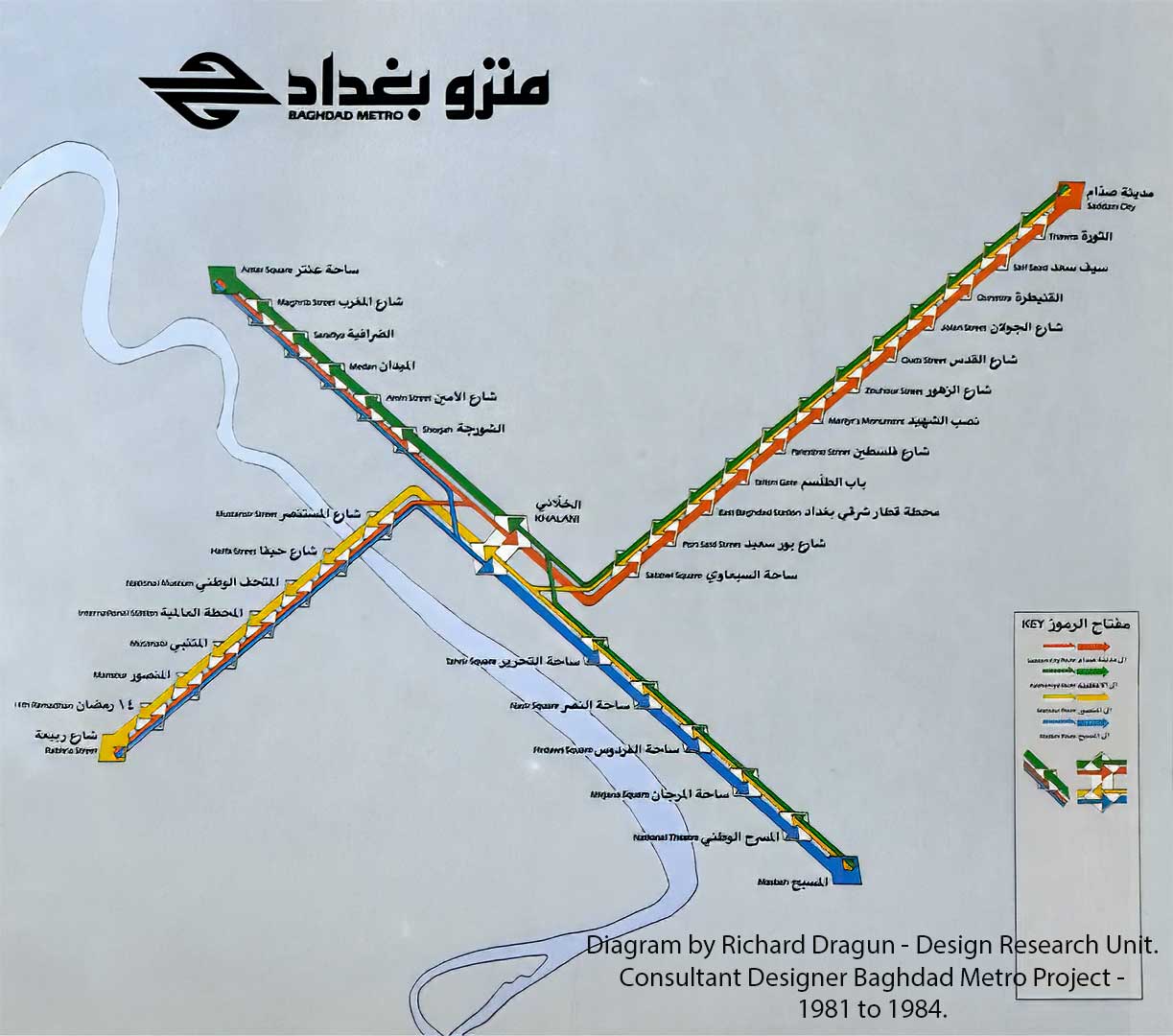
Saddam Hussein launched the original Baghdad Metro project in 1983 to reduce traffic congestion in Baghdad.
1980–1983: Initial plans and blueprints for an underground network were drawn up with international contractors.
1983: Construction officially kicked off with a planned test-running phase slated for 1986.
Mid-1980s: The outbreak and economic strain of the Iran–Iraq War forced Saddam to halt the project and dismiss foreign contractors.
Decades later, modern leadership revived these old transit blueprints into a larger, multi-billion-dollar urban railway network.
We were all somewhat shocked that our Father wanted to return to the Middle East after a life time of engineering service overseas.
He would recall stories that the Baghdad Metro was one of the most difficult and dangerous assignments.
During the early years of the Iran-Iraq war, he always felt intimidated by client meetings which were usually held with Saddam Hussein’s senior (and always armed) military personnel!
Philip Hoad - Viv Hoad's Son.
Viv's moved to Baghdad without his family although his wife visited him several times while his daughter visited him just once.
Viv's daughter, Mandy, was a Student at London Universtity back then. He was concerned Mandy may criticise, inadvertently or otherwise, Saddam Hussein's Regime so gave Mandy strict instructions on what not to say.
Daughter Mandy Recalls....
Our father's Secretary in Baghdad was English and married to a senior Baath party member.
I went to tea with them on my own. My father had warned me not to say much as they would likely quiz me
The Secretary, her husband, their son and daughter were there. The daughter was training to be a dentist.
I felt I was definitely subjected to a form of interrogation!
Conditions back then were such that there could be threats to personal safety or Iraq could have even imploded.
With Saddam Hussein halting the Baghdad Metro Project in 1985, Viv returned to Halcrow's London Office
In 1991, Viv retired from Sir Willam Halcrow and Partners as a Partner and Member of the Board.
He went to live in The Laurels, his house in Dulwich, London.
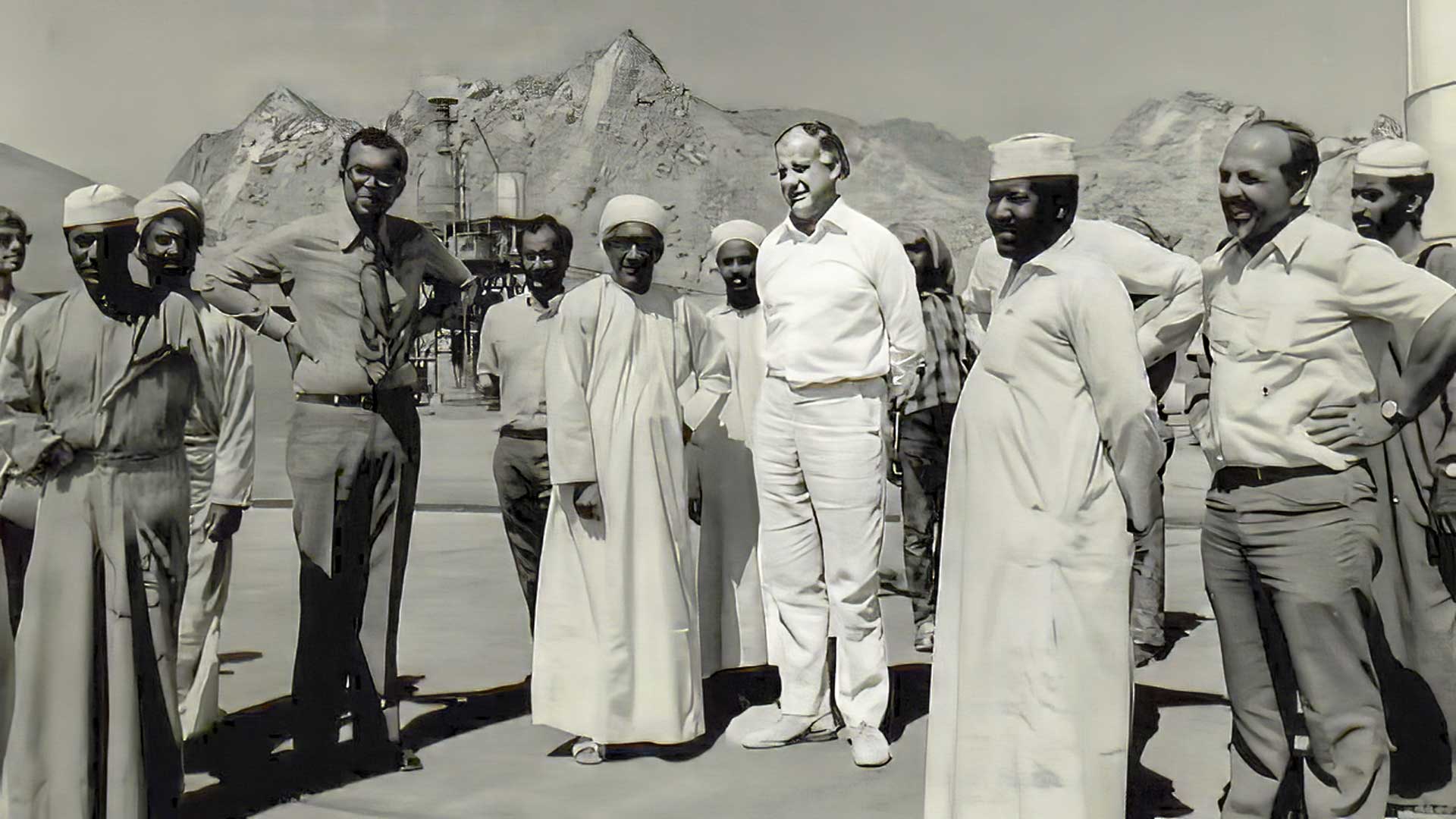
Our father was one of the most humble and kind persons you could ever meet.
He was a true gentleman with an outstanding character and love for the Arab world.